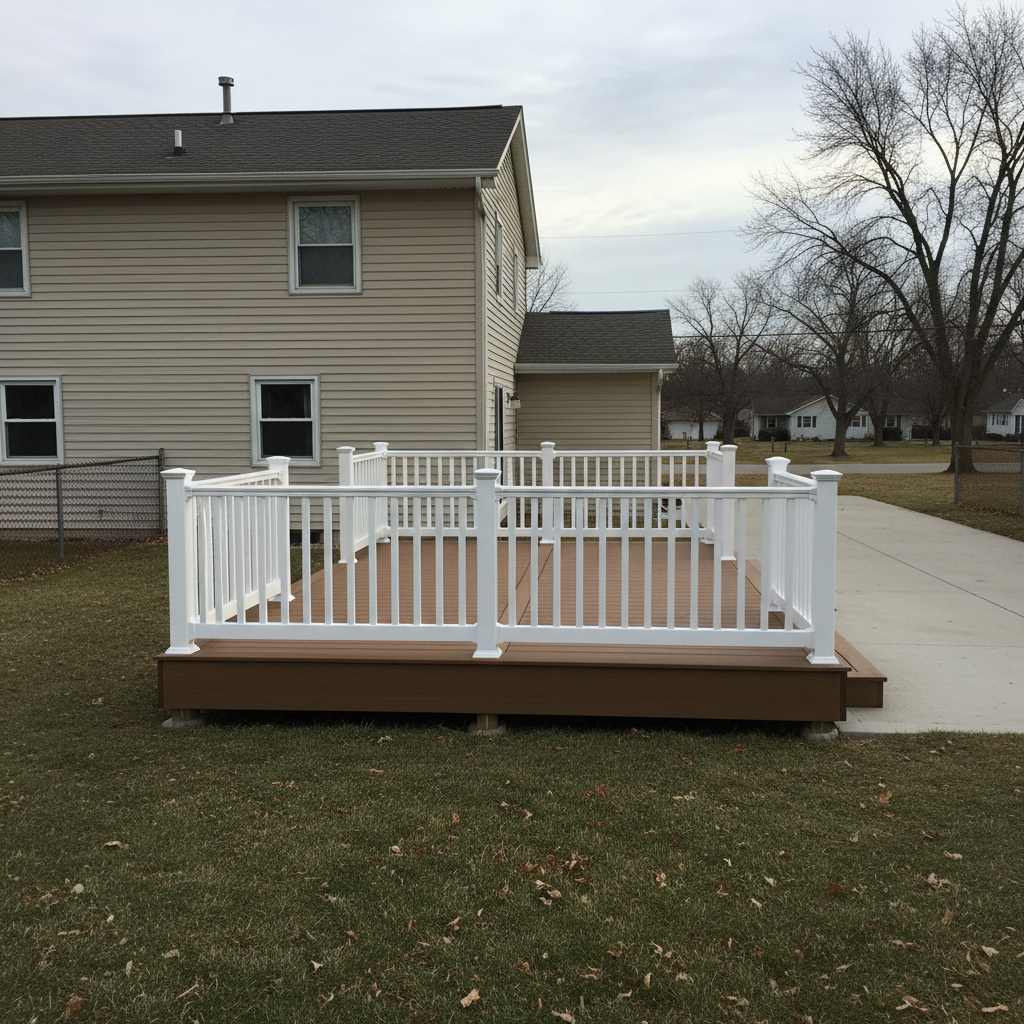
Most people start shopping for a deck builder the way they'd shop for a lawn service, by getting three numbers and picking the one in the middle. That works fine for cutting grass. It doesn't work for a structure that's going to hold your grill, your furniture, and twelve people at a graduation party, forty-two inches in the air, through a Chicago winter.
Here's what actually separates a builder worth hiring from one you'll be calling back in three years.
Ask who's pouring the footings and how deep
In Cook County and most of the collar counties, footings for an attached deck need to go below the frost line, which around here means 42 inches. That's not a suggestion. Chicago clay holds water, and when that water freezes it expands and pushes up on anything sitting above the frost line. A footing poured at 24 or 30 inches might hold for a season or two, then start heaving. You'll see it as a deck that's suddenly out of level, or a post that's lifted a half inch off its footing.
A builder who knows this market will mention the frost depth before you ask. One who shrugs and says "we usually just go a couple feet down" is telling you he's either not from here or not paying attention. Ask for the footing diameter too. A sonotube footing for a deck post is usually 10 to 12 inches across, sized to the load it's carrying, not a one-size-fits-all number.
Permits aren't optional, and that's a good thing
If the deck attaches to your house, almost every municipality in the Chicago area is going to want a permit, whether that's the city's Department of Buildings or a suburban building department in Naperville, Evanston, or wherever you live. The inspector typically wants to see the footing holes before concrete goes in, and comes back for a final once the structure's up. That means two site visits minimum, and a few days of schedule built around when the inspector can show up.
A contractor who tells you "we can skip the permit, it'll save you money and time" is not doing you a favor. It means there's no third party checking that your ledger board is actually bolted into the rim joist with lag screws or through-bolts, not just nailed on. It means no one's confirming the flashing above the ledger is actually keeping water out of your house framing. Unpermitted decks also show up as a problem when you sell the house, because buyers' inspectors look for the permit record.
If you're in a subdivision with an HOA, which is common in newer developments in places like Naperville or the far western suburbs, check with them too. Setback rules and sometimes material or color restrictions are separate from the city's permit process, and they'll hold up a project just as fast.
What a real quote looks like
A one-page estimate that says "Build deck, 16x20, $11,000" tells you almost nothing. A quote worth comparing against another should break out:
- Footing count, size, and depth
- Framing lumber species and spacing, usually 16 inches on center for joists
- Decking material, whether that's pressure-treated pine, cedar, or a composite brand like Trex or TimberTech
- Railing type and baluster spacing, which by code needs to be under 4 inches apart
- Whether demolition and haul-away of the old deck is included or billed separately
If two quotes are $4,000 apart, the difference is usually in one of those line items, not in the builder's profit margin. Ask them to walk you through it.
Red flags worth walking away from
A few things that should end the conversation:
A quote with no mention of a permit, on a deck attached to the house. A deposit request for more than a third of the job before any work starts. Lumber that's going to sit stacked in your yard uncovered for two weeks before the crew shows up, since untreated or even treated lumber left out in Chicago's spring rain can start cupping before it's ever installed. No written lien waiver process, which protects you if the builder doesn't pay a supplier and that supplier comes after your property. And anyone who can't tell you, off the top of their head, what frost depth they build to in this area. That's not a trick question, it's the first thing a local builder should know cold.
Material choices and what Chicago weather does to them
Pressure-treated pine is still the most common decking material here because it's cheaper upfront, but it needs staining or sealing roughly every two to three years to hold up against freeze-thaw cycling and the humidity we get in July and August. Skip that maintenance and you'll see graying, splitting, and popped fasteners within five or six years.
Composite decking costs more going in, often 30 to 50 percent more than pressure-treated, but it doesn't need staining and handles the wet-dry cycle better. It's not maintenance-free, though. Snow and ice melt products with calcium chloride can discolor some composite brands if they're not cleared off promptly, and boards still need gaps for drainage so water isn't sitting on the surface all winter.
Neither choice is wrong. The builder's job is to ask how you actually plan to use the deck and tell you honestly what the upkeep looks like, not just upsell you to whatever has the better margin.
What the older housing stock around here means for your project
If you're in a bungalow neighborhood or a two-flat built before 1950, the ground near your house has usually been disturbed before, by old sidewalk pours, buried downspout lines, or a previous deck's footings that were never pulled. A builder who's worked these streets will dig a test hole before finalizing footing locations instead of guessing. In newer subdivisions built in the last 20 to 30 years, the soil's more consistent and the lot grading was usually done to code, but setbacks from the property line tend to be tighter, so confirming the survey matters more.
Either way, a builder who asks to see your plat of survey before quoting the job is doing the legwork that keeps you from finding out, after the footings are poured, that the deck sits eight inches into a setback.
We've built and repaired decks across Chicago and the surrounding towns long enough to know which questions actually matter before the first shovel goes in the ground. If you want a second opinion on a quote you've already got, or want to start from scratch, take a look at our deck builder work and give us a call.