Every job below is one we do ourselves across Chicago.
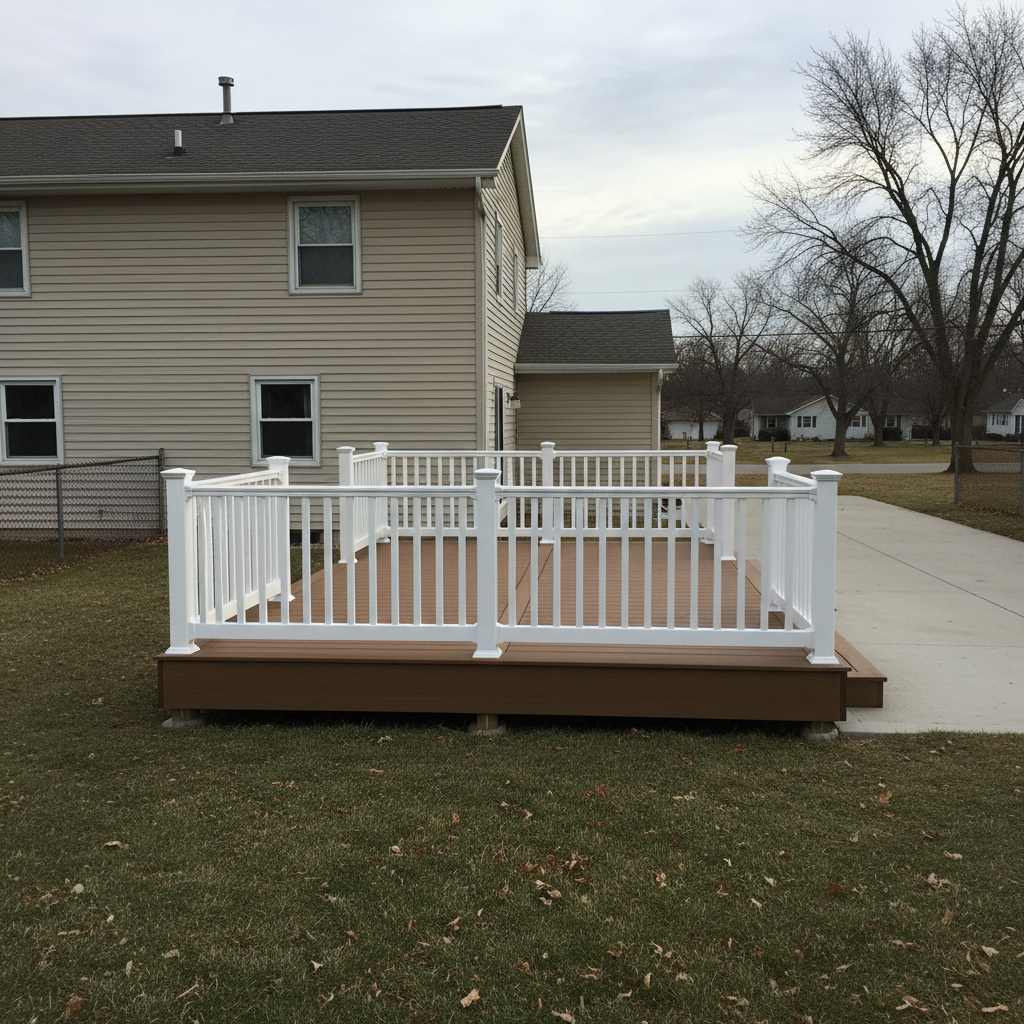
We frame new decks with pressure-treated joists set 16 inches on center, bolted to a properly flashed ledger board or set free-standing on their own footings when the house framing won't take a ledger. Footings go down below Chicago's 42-inch frost line, not at 24 or 30 inches like some crews will try to get away with. You pick the decking, pressure-treated, cedar, or composite, and we handle the permit and the inspection.
Soft boards, a railing that wobbles when you lean on it, stairs that bounce, we see all of it. Sometimes it's one rotted joist near the ledger where water's been sitting, sometimes the whole substructure needs to come out. We replace what's actually failed instead of tearing off a deck that's still sound in most places.
Pressure-treated pine and cedar both need to breathe and shed water, or they go gray and start to splinter within a couple seasons. We pressure wash, let the wood dry for at least 48 hours, then apply a semi-transparent or solid stain depending on how much grain you want showing. Plan on resealing every two to three years in this climate, the freeze-thaw cycle is hard on exposed wood.
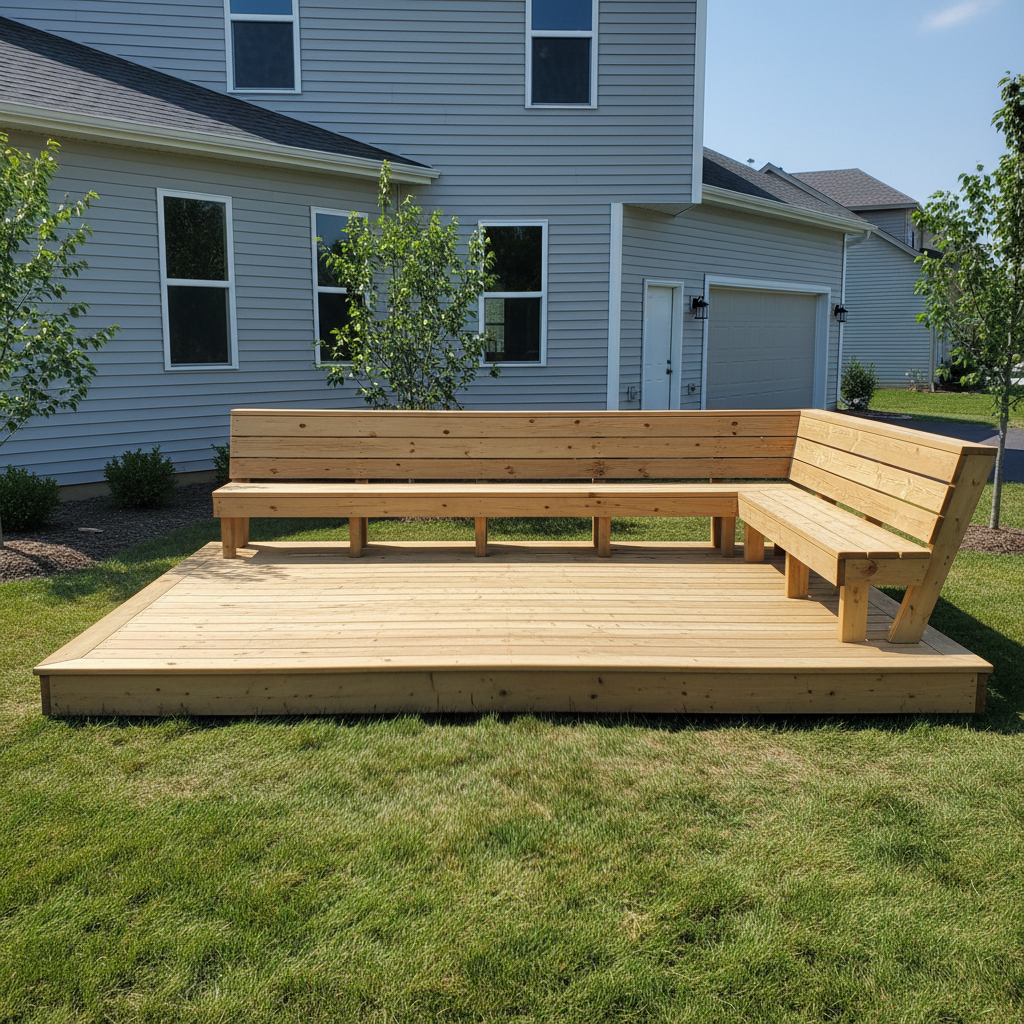
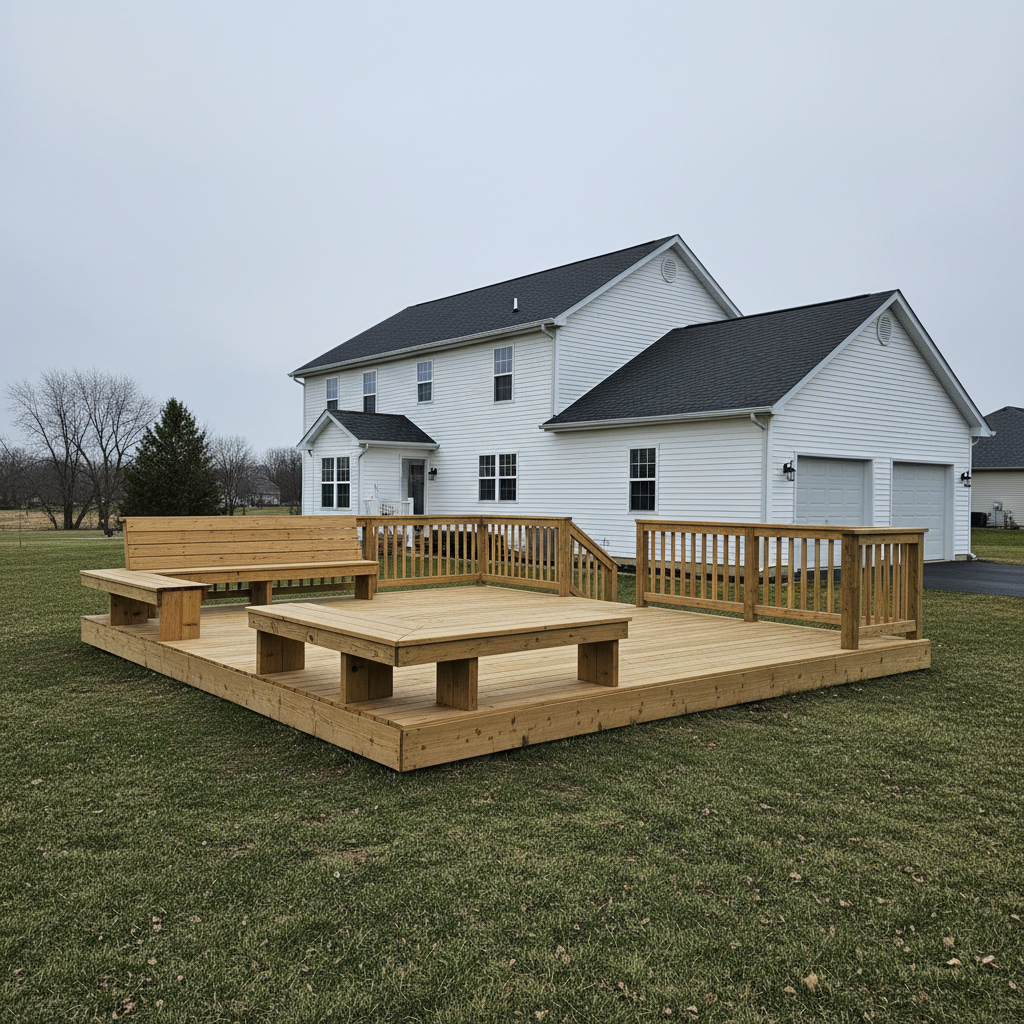
Not every yard fits a square deck off the back door. We'll draw up something with a stepped-down landing, a built-in bench, or a cutout around an existing tree if that's what the lot calls for. You get a drawing to look at before we order lumber, not a verbal description.
Composite boards like Trex or TimberTech don't rot and don't need staining, but they expand and contract more than wood with temperature swings, so the gap between boards and the fastener spacing have to be set correctly or you'll get buckling by year two. We use hidden fastener systems on most composite jobs so you don't see a screw head anywhere on the surface. It costs more upfront than pressure-treated, but there's no recurring stain bill.
A wobbly railing post is usually a sign the post was toe-nailed to the rim joist instead of bolted through with a structural bracket. We rebuild railings to current code, 36-inch height minimum, balusters spaced so a 4-inch sphere can't pass through. If you just want the look updated we can swap cable rail or metal balusters onto an existing frame that's still structurally sound.
Sometimes the cheapest honest answer is to tear the old deck out rather than keep patching it. We pull the old structure, haul the lumber away, and check the ledger area and rim joist on the house for rot before anything new goes back up. That's usually where we find the problem that was going to cause trouble again anyway.
Decks that step down a sloped backyard or sit two stories up need engineered beam sizing and extra bracing, not just bigger lumber. We size the beams and posts to span and height, and on taller decks we add diagonal bracing so the structure doesn't sway in the wind. These usually need an engineered drawing for permit, which we can arrange.
A deck can look fine on top and still have a joist rotting out underneath, especially near the ledger where water collects. We get under the deck and check the joists, the ledger flashing, and the footings for frost heave or rot before we ever touch the decking boards. Catching it here is a lot cheaper than catching it after someone's foot goes through a board.
A pergola or a roof over part of the deck changes how much you actually use it in a Chicago summer, shade makes a real difference by July. We build these to tie into the existing deck framing, with posts sized for the extra load and footings to match. Covered sections need their own drainage plan so you're not funneling rainwater onto the deck boards below.
Four steps, and no surprises in any of them.
You tell us what you want doing, we look at what is actually there, and we ask the awkward questions early.
In writing, itemised, free. If something might add cost later we flag it now rather than at the end.
Same crew throughout. We cover your floors, keep the dust down and tidy up before we leave each day.
You point out anything you are not happy with and we fix it before the invoice, not after.
We bring the same crew and the same material standards to every town we work in.
Questions that come up once a deck project actually gets underway.
Describe the problem and we will tell you what it probably is. No obligation.